Reporting Period: January 2025 – December 2025
Geographic Focus: Sanaag Region
- Introduction and Compound Risk Analysis (Conflict Background & Climate Dynamics)
Sanaag region faces critical security and social challenges stemming from armed clan conflicts that threaten social peace and hinder sustainable development. The roots of these crises lie directly in intense competition over the ownership of pastures, plains, and scarce water resources. These structural drivers have been severely exacerbated by compound risks—namely, recurrent cycles of devastating drought and the broader impacts of climate change, which have depleted natural resources and ignited localized environmental conflicts.
The depth of the crisis is further compounded by a critical vacuum in neutral local mediation, the declining influence and weakness of traditional clan elders, and the limited scope of formal government interventions in dispute resolution and security enforcement. This institutional and traditional vacuum threatens an imminent escalation and expansion of bloody clashes if systemic solutions and sustainable stabilization mechanisms are not established. Furthermore, a key structural challenge is the passive role of youth and other civil society groups, who display a significant lack of civic awareness and a deficiency in feeling collective responsibility toward community peacebuilding and conflict mitigation, alongside the proliferation of weapons and drugs.
In tracking the underlying drivers and indicators of these conflicts, joint statistics gathered by the HADAF Center in coordination with The Office of Puntland Human Rights Defender (Badhan Office) indicate that in 2024, approximately 19 people were killed in the areas of Badhan, Laasqoray, and Xingalool. The majority of these fatalities were attributed to the ongoing conflict in the Milxo area, the repercussions of unregulated weapon proliferation, revenge killings (blood feuds), absence of justice, weakness of judicial and security authorities, and rising drug abuse.
These systemic drivers extended into 2025, during which the region witnessed prominent bloody conflicts, most notably:
- Dureera Conflict (March 2025): Armed clashes broke out on the morning of March 10, 2025, between the (Bah-ogayslabe and Muhumud) clans in the Dureera area, resulting in casualties. The crisis escalated following the collapse of the Ceelbuuh Agreement, which was rejected by one of the parties, leading to retaliatory killings in Badhan city in August 2025 and Oct, 2025.
- Other Disputes: The cyclical shocks of recurring events in the Milxo area on local peace, and historic disputes over pasture and valley ownership, such as the Xubeera conflict in 2024.
In response to these fragile conditions, HADAF Center led intensive, adaptive programs throughout 2025 aimed at conflict prevention, political dialogue, and local conciliation.
- Strategic Framework and Operational Methodology
The Center adopted a multi-layered stabilization strategy focusing on community-led dialogue, risk mitigation, and grassroots advocacy. The key mechanisms deployed were:
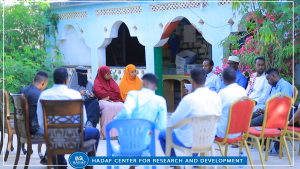
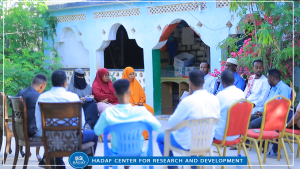
- Direct Community Forums and targeted dialogue sessions (both field-based and virtual) to re-establish communication channels between conflicting factions.
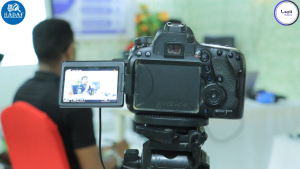
- Behavior Change Campaigns, including the production and broadcasting of peace-building videos and the distribution of field posters to dismantle hate speech and tribal incitement.
- Summary of Core Interventions (2025)
HADAF Center successfully implemented 6 strategic peacebuilding programs addressing specific geographic flashpoints (including two forums in Badhan, one in Xingalool, and cross-border digital sessions):
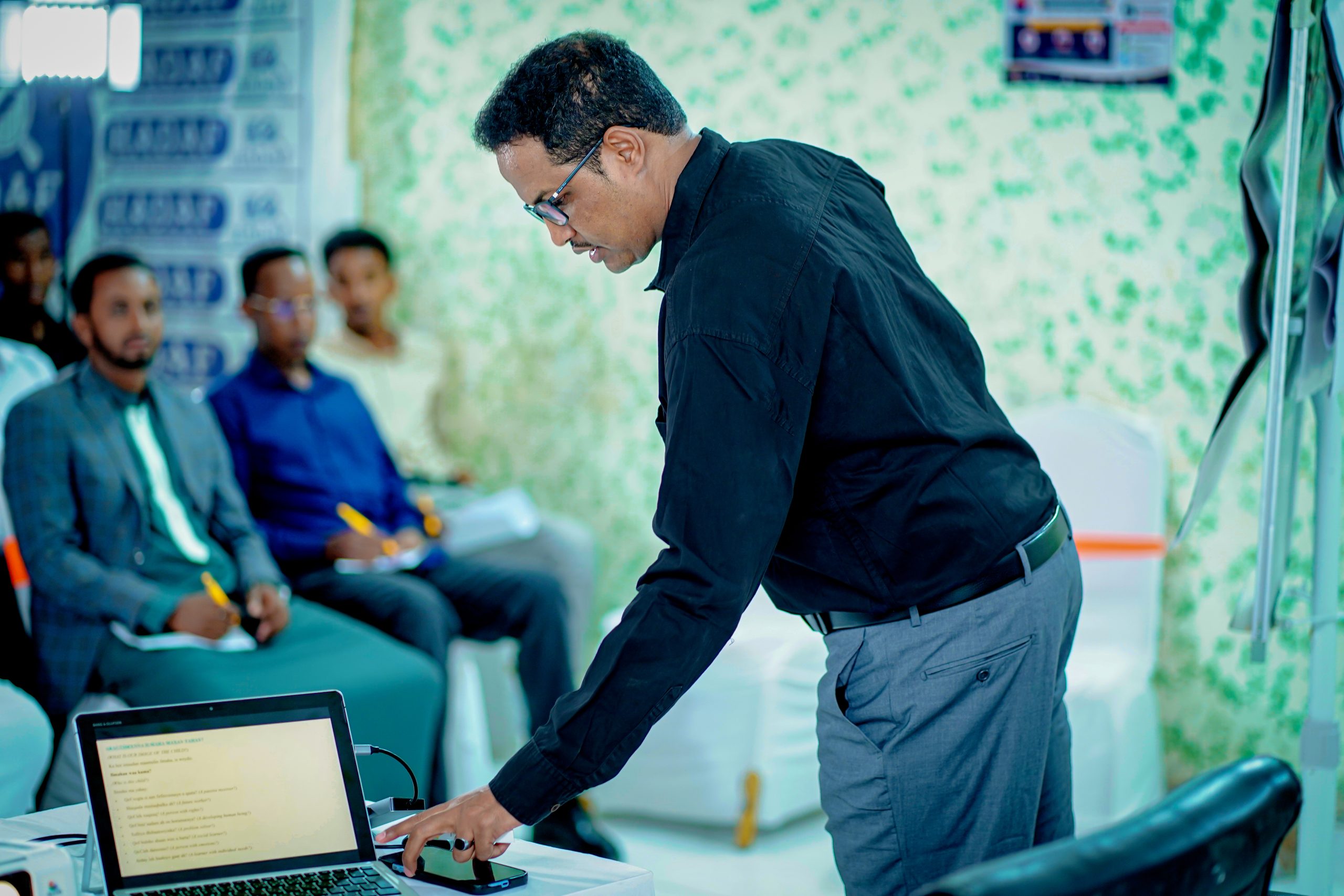
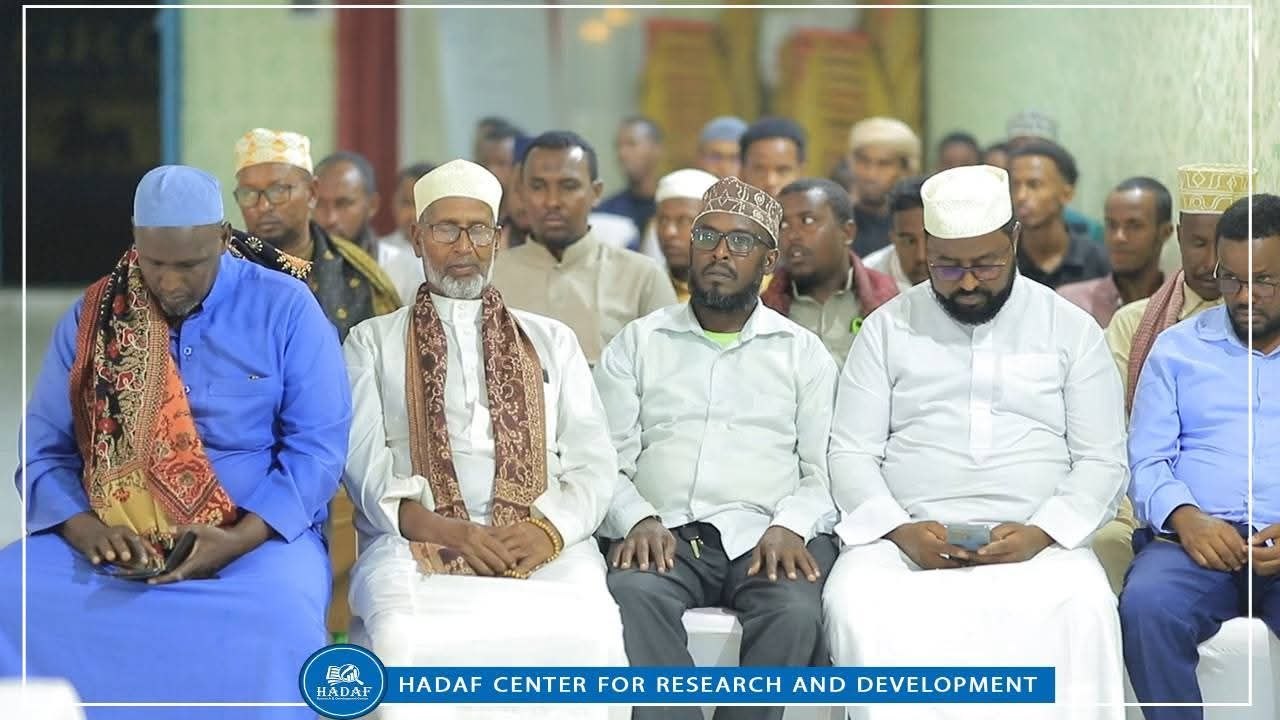
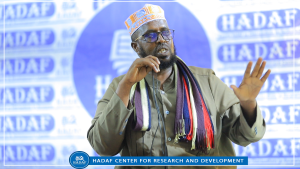
- ‘Role of Leadership in Community Stewardship – Ilaalinta Bedqabka Bulshada iyo kaalinta Hoggaanka”‘ (April 28, 2025): Engaged prominent religious scholars and intellectuals to revitalize traditional mediation mechanisms and ethical community care.
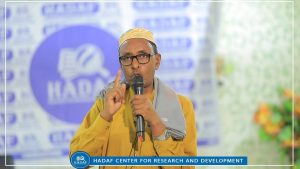
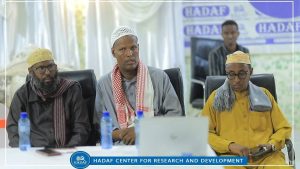
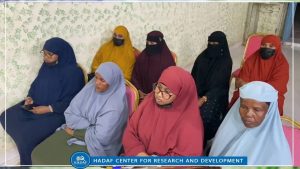
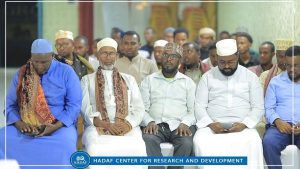
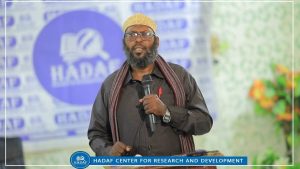
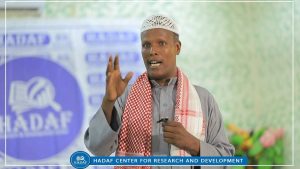
https://www.facebook.com/HADAFCENTERSANAAG/videos/1501506937498149/?mibextid=9drbnH&s=yWDuG2&fs=e
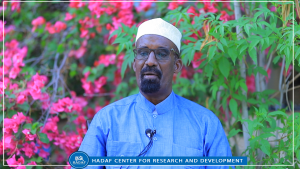
- Anti-Retaliation Advocacy Session: Led by Dr. Abdinasir jamac warsame and Dr. Mohamed Nour Yassin Sheikh Abubakar, focusing on the Islamic View, legal, moral, and social degradation caused by cycles of revenge killings.
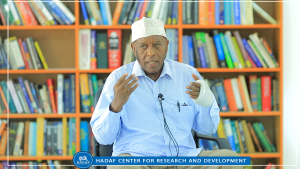
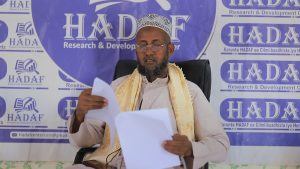
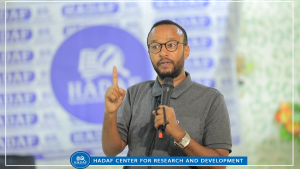
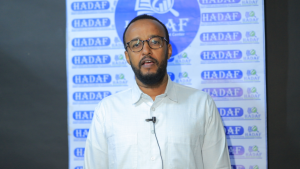
https://www.facebook.com/share/v/1EdBjyJtWV/
- ‘Aragti Wadaag’ (Perspective Sharing) Youth Forum: A targeted dialogue designed to counter civic apathy and empower youth to realize their collective responsibility in local stabilization.
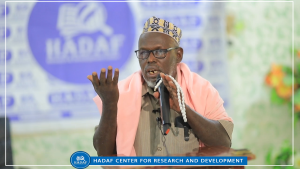
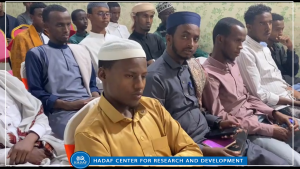
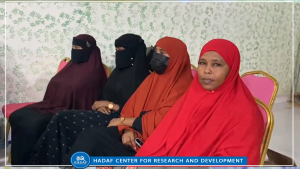
- Traditional Leaders Alignment Dialogue: July, 2025 A focused assembly with clan elders to enhance traditional conflict-resolution mechanisms and fill the structural mediation vacuum.
- Diaspora Digital Seminar (Zoom): Nov, 2025, A cross-border dialogue evaluating the financial and political impact of the diaspora on the Dureera plain crisis, redirecting external support toward peace building rather than fueling escalation.
- Alternative Media and Public Awareness Campaign: Oct, 2025, Focused on broadcasting peace videos and field messaging to build resilience against digital incitement and sub-clan polarization. https://www.facebook.com/share/p/1BpKrThWLM/4. Target Demographics and Stakeholder Inclusion
- Traditional & Local Authorities: Clan elders, and municipal administrations who form the bedrock of local dispute resolution.
- Civil Society & High-Risk Demographics: Women groups (essential for informal mediation), youth (vulnerable to armed mobilization), sports groups, local journalists, and digital influencers who directly shape public perception on social media.
5. Strategic Recommendations and Risk Prognosis
- Climate Adaptation and Natural Resource Governance: Establish inclusive, climate-resilient rangeland and water management frameworks to proactively mitigate environmental conflicts.
- Strengthening Institutional Rule of Law: Capacitate local security and judicial structures to suppress small arms proliferation, counter narcotics distribution, and enforce legal accountability.
- Activating Civic Responsibility: Institutionalize continuous civic awareness initiatives to transform youth and civil society groups into proactive peace custodians.
- Operational Risk Prognosis: If comprehensive, structurally backed mediation frameworks are not immediately established, the intersection of severe climate shocks and institutional vacuums will inevitably drive higher casualty rates, expand local conflicts, and entirely paralyze regional development.6. Challenges and Obstacles
- Limited Funding: The center faced an acute shortage of resources and funding allocated for these vital and sensitive programs, which limits the capacity for sustainable geographical expansion to cover all volatile parts of the Sanaag region and ensure the continuity of early warning initiatives.
1. Hadaljeedinta, Kulanka Ilaalinta Bedqabka Bulshada. Sh. Cali Maxamed, Cali Dheere #HADAF
2. Kulanka: Ilaalinta bedqabka bulshada iyo kaalinta hoggaanka. #Hadaf
3. Ilaalinta Bedqabka bulshada #HADAF
4. Bedqabka Bulshada: Dilka iyo khatarra uu leeyahay, Sh/Dr. Maxamed Nuur Sh. Yaasiin
#SANAAG #BADHAN #HADAF #HADAFCENTER #HADAFFOUNDATION #PEACE